Sewer Smell in the House: Causes and Fixes
A sewer smell indoors is your plumbing asking for attention — and it is almost always traceable to a specific cause. Work through this list from simplest to most serious; most homes find their answer in the first two.
Cause one: a dry drain trap (the most common)
Every drain has a P-trap — a U-shaped bend that holds a plug of water sealing your home from sewer gas. In a rarely used bathroom, floor drain or laundry sink, that water evaporates over weeks, the seal breaks, and sewer gas drifts in. The fix is embarrassingly simple: run water for a minute to refill the trap. Adding a teaspoon of mineral oil on top slows future evaporation. If the smell vanishes, you have found your cause.
Cause two: a blocked or failed vent
Your plumbing vents through the roof, letting sewer gases out and air in so drains flow. A vent blocked by debris or a nest — or a cracked vent pipe inside a wall — can push odors into living space and cause gurgling drains as a bonus symptom. Vent problems are a general plumber’s territory more than a sewer specialist’s, unless the gurgling comes with whole-house slow drains (then read on).
Cause three: a failing wax ring or fixture seal
A toilet whose wax ring has failed can leak sewer gas (and eventually water) at its base — the smell concentrates in that bathroom and the toilet may rock slightly. Reseating the toilet with a new ring fixes it. Similarly, a cracked trap or loose connection under a sink vents odor right where you notice it most.
Cause four: a partial blockage in the main line
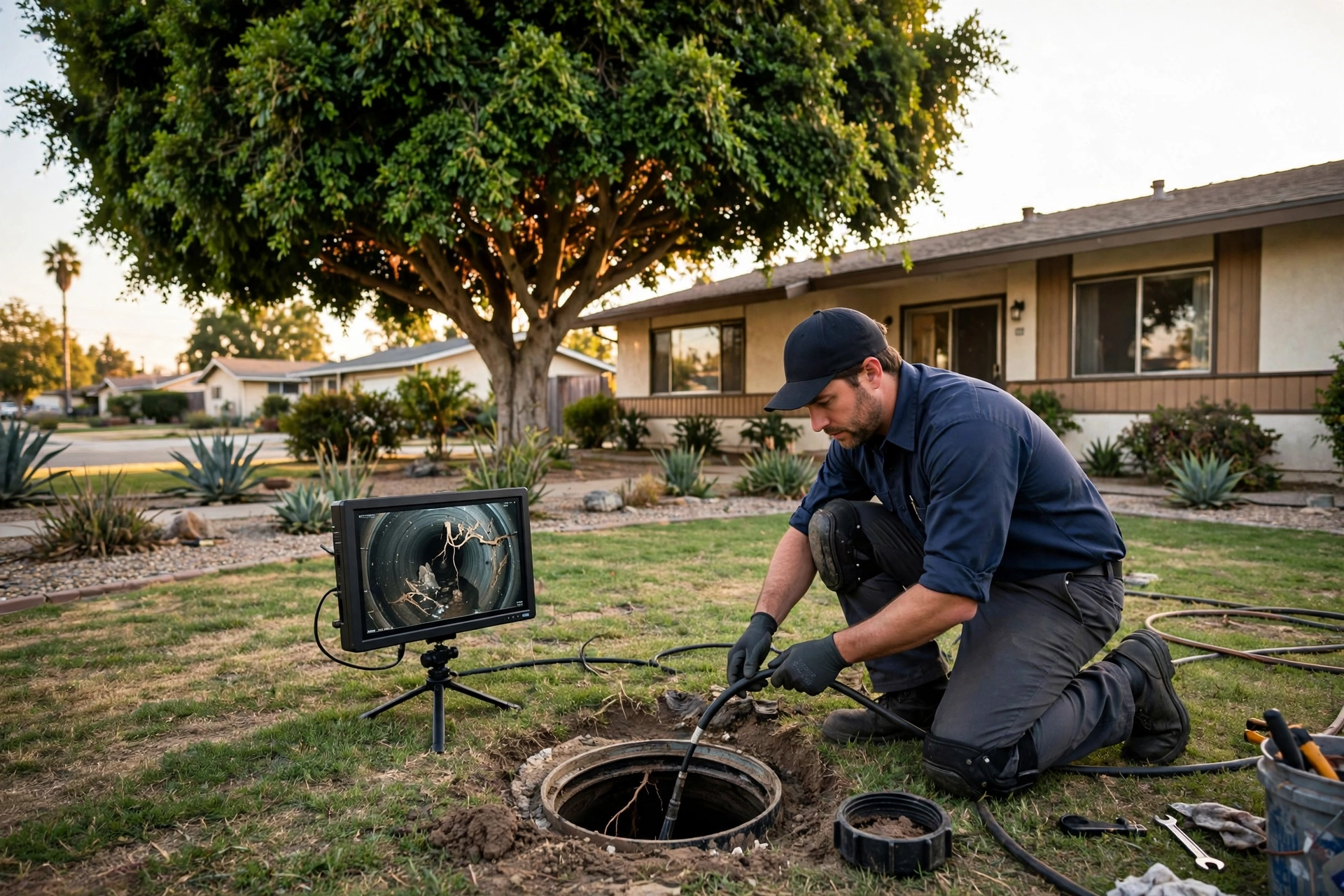
When a main line is partially blocked — roots, grease, a belly holding waste — gases generated in the line can burp back through the lowest or weakest seals in the house, and the smell often arrives with slow drains and gurgling. This is the smell that means the line, not a fixture. Cleaning the line addresses it if the pipe is sound; see our sewer line cleaning page for how a proper cleaning works.
Cause five: a cracked or leaking lateral
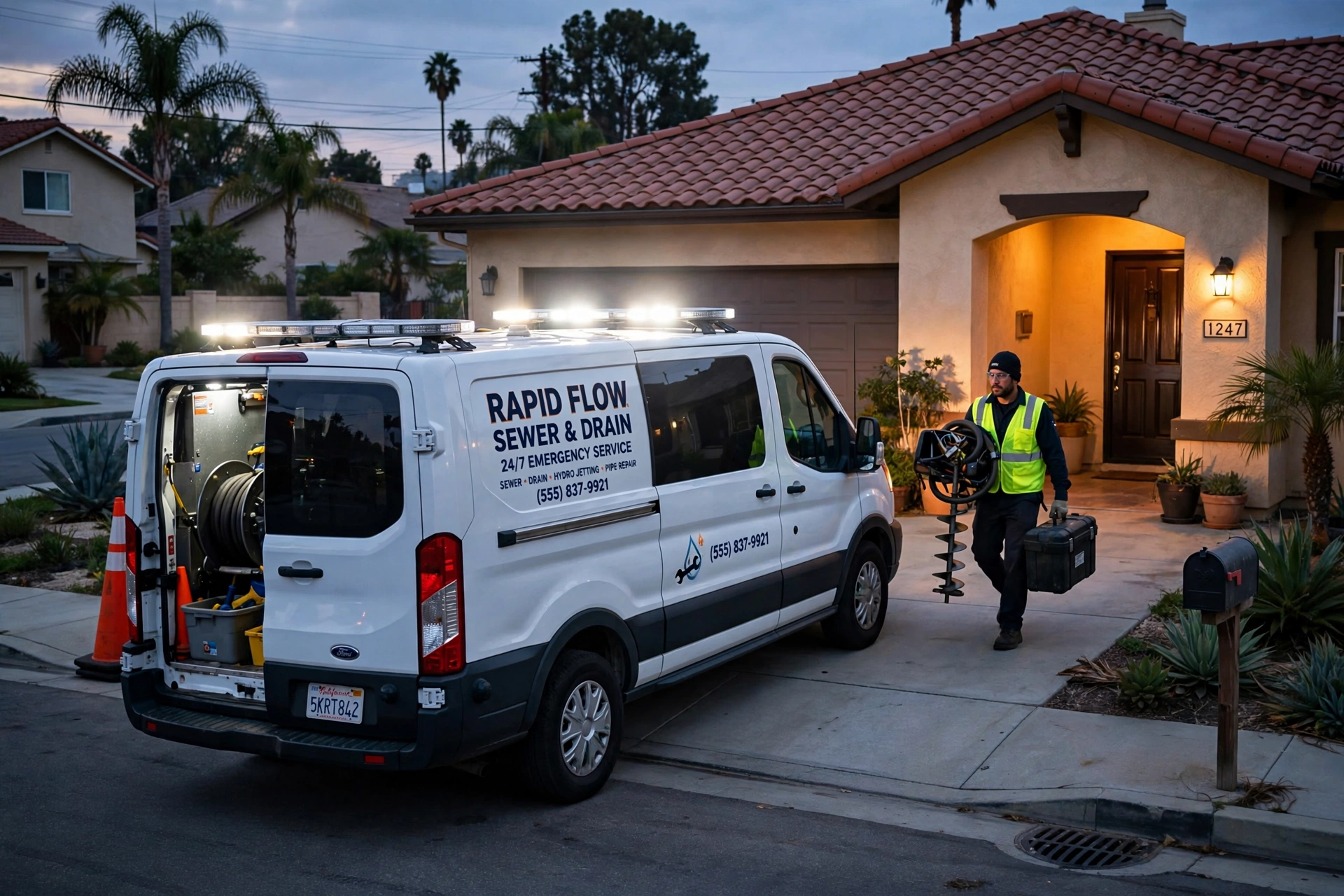
A broken lateral under the yard or slab can vent gas into soil and up through floor drains or foundation cracks, and it often brings companions: soggy or extra-green lawn patches, slow drains, recurring clogs. A smell with those symptoms deserves a camera inspection — it is one of the classic signs on our list of signs a sewer line is failing.
When to treat it as urgent
Sewer gas is mostly a nuisance at household concentrations, but treat these as same-day problems: smell plus sewage backup anywhere, smell plus several slow drains, or a strong odor in a home with infants, elderly residents or anyone with respiratory issues. And if the smell is accompanied by symptoms like headaches or dizziness in several people, leave, ventilate if safe, and call — let professionals sort out the source.
A five-minute diagnostic order
One: refill every trap (run all faucets, flush all toilets, pour water in floor drains). Two: check whether the smell localizes to one bathroom (fixture seal) or the whole house (vent or main line). Three: note any slow drains or gurgling — if present, the main line moves to the top of the list. Four: walk the yard over the line’s path for soggy or green patches. By the end you will know whether you need a plumber, a sewer camera, or just a cup of water.
At the levels typical of a dry trap or small leak, it is mainly unpleasant. Sewer gas does contain hydrogen sulfide and methane, so a strong, persistent smell should never just be lived with — find and fix the source, and ventilate in the meantime.
Intermittent odor fits a trap that is slowly drying out, a vent issue that depends on wind direction, or a partial blockage whose gas escapes only under certain flows. Intermittent is still diagnostic information — note when it happens (after laundry? after rain? in one room?) and tell the professional.
Odors can travel through shared connections and street mains, but the investigation always starts with your own traps, vents and lateral — statistically, the source is in the house making the complaint.
Related Services & Guides
Have This Problem at Your Home?
Guides explain the problem — a camera shows whether it is yours. One call connects you with an independent local sewer professional in the Cerritos area.
Call (888) 555-0199 →Get in Touch with Us
The fastest way to reach a local sewer professional is by phone. Prefer to write it down first? Send the short form — describe what you are seeing, where, and since when.