Tree Roots in Your Sewer Line: What Actually Works
Roots are the number one cause of sewer line failure in the Cerritos cluster — and the most misunderstood. Cutting them feels like fixing them. It is not. Here is how roots actually get in, why they always come back thicker, and the three things that genuinely work.
How roots get into a sewer line
A sewer lateral is a buffet sign for a tree: water, nutrients, and oxygen, flowing year-round a few feet below the lawn. Fine root hairs find the moisture escaping from a clay pipe joint — clay laterals are built from short sections with a joint every few feet — and slip through openings as thin as paper. Inside, fed constantly, the hairs thicken into a root mass that works like a net: toilet paper and solids snag, the net grows, and flow shrinks. Given years, the expanding root mass can crack the joint open wider or split the pipe itself.
Why cutting roots is a subscription, not a solution
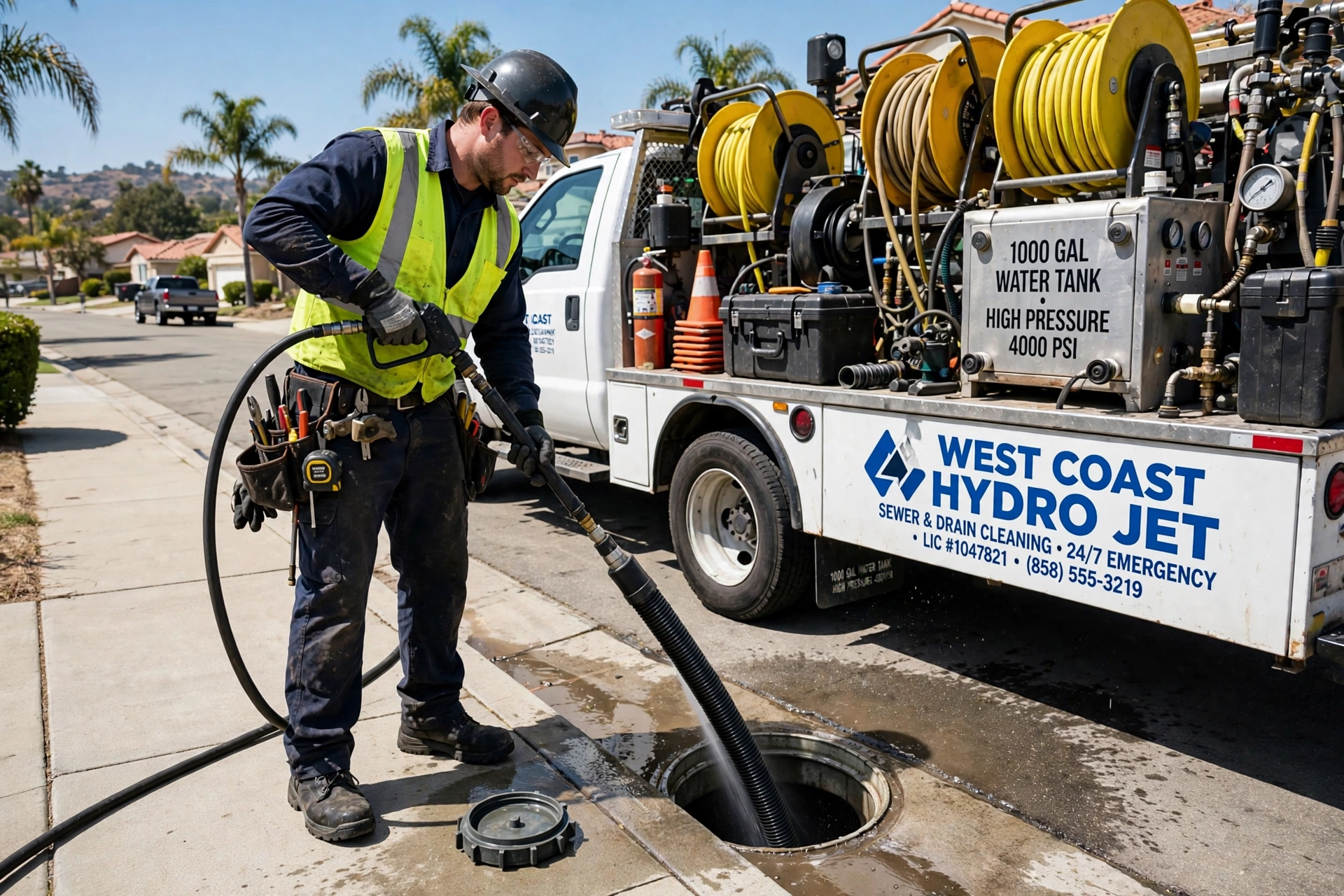
Mechanical cutting and hydro-jetting remove the root mass and restore flow — genuinely useful, and the right emergency move. But the entry point, the open joint, is unchanged, and a cut root responds the way a pruned branch does: it regrows, often thicker, from the same spot. Homeowners in this area describe the cycle precisely: clearing lasts a year, then eight months, then five. Shortening intervals are the pipe telling you the joint is opening up.
What actually works, option one: seal the joints
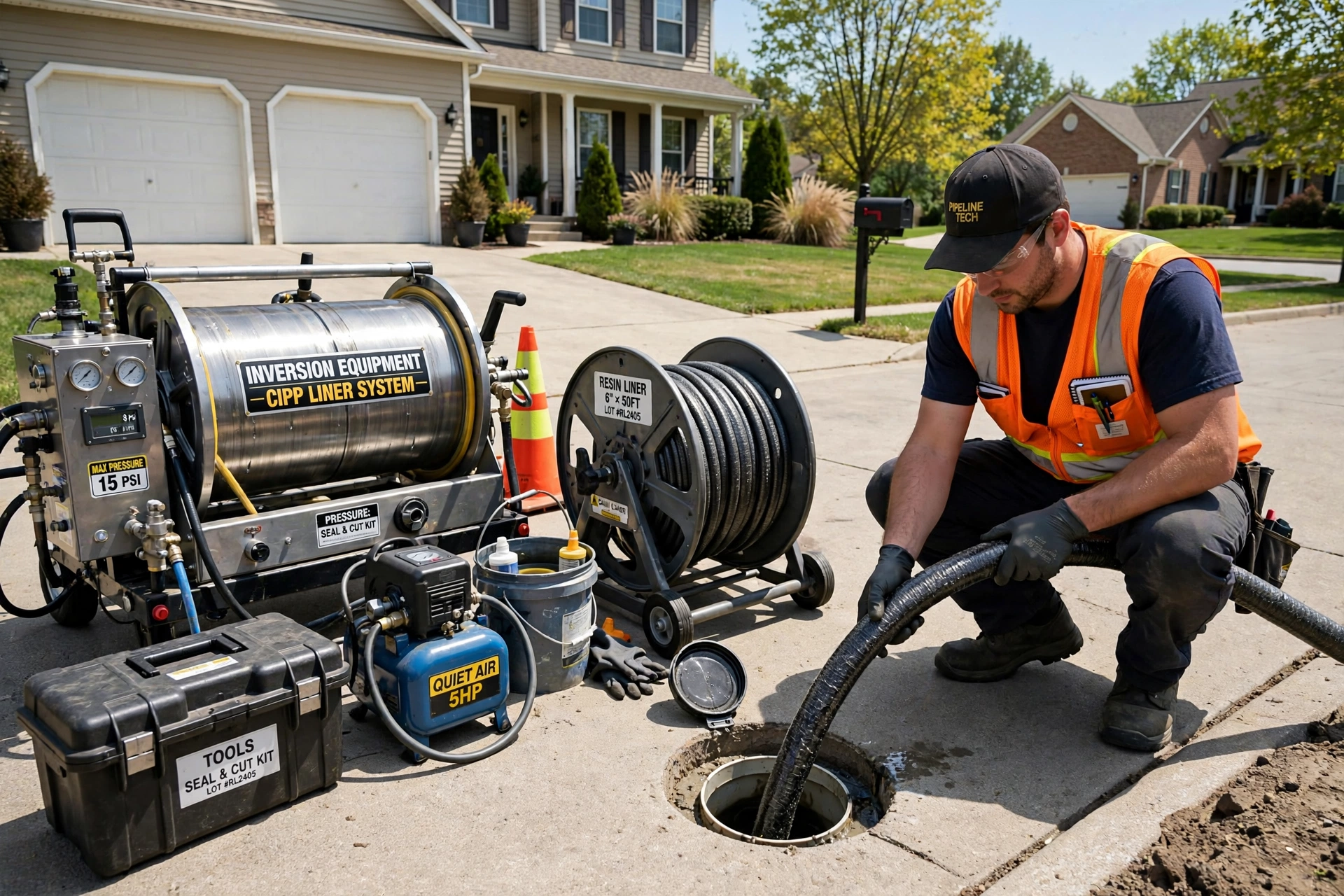
CIPP lining installs a new jointless pipe inside the old one. No joints, no entry points, no roots — the buffet closes permanently along the lined run. For a clay line whose structure is still sound but whose joints leak roots at joint after joint, lining is usually the definitive answer. Our explainer on how trenchless repair works covers the process in detail.
What actually works, option two: replace the bad stretch
When roots have concentrated at one or two joints and cracked the pipe there, a targeted spot repair cuts out the damaged section and ties in new sealed pipe. The rest of the line, if the camera shows it sound, stays. This is the right scale of fix for localized root damage.
What actually works, option three: replace the line
When roots are simply the most visible symptom of a line that is cracked, offset and worn along its whole run, sectional fixes stop making sense. A new PVC or HDPE lateral has sealed joints that roots cannot penetrate the way they do clay.
What does not work for long
Chemical root killers (including copper sulfate and foaming herbicides) can slow regrowth between clearings and have a role as maintenance on a line you plan to keep clearing — but they do not seal a single joint, they must be reapplied, and they are hard on the tree if overused near it. Rock salt is worse: it can damage the pipe and the tree and is not recommended. And removing the tree, while sometimes necessary, does nothing for the open joint the roots leave behind — other roots, and soil shift, will find it.
The trees to watch in this area
Ficus street trees are the famous offenders in Cerritos and Buena Park — aggressive, water-seeking roots matched to clay laterals of exactly the wrong age. But any large tree within roughly its canopy width of the line’s path — liquidambar, camphor, mature palms with dense root balls nearby — can do it. The tree is not the villain; the open joint is.
Start with the camera
Roots are easy to blame and easy to confirm: a camera inspection shows the root mass, its location, and the condition of the joints around it. That footage decides whether you are maintaining (clean on a schedule), sealing (line it), or repairing (cut out the bad stretch) — three very different answers to the same symptom.
Commonly one to two years before flow is affected, sometimes under a year on an aggressive tree with a wide-open joint. If your clearing interval keeps shrinking, the joint is deteriorating — that trend is the signal to seal or repair.
Used as directed, copper-based root treatments target roots inside the pipe and are generally tolerated by established trees, but they are chemicals with real limits: they do not fix the joint, and repeated heavy use near a tree is unwise. Think of them as buying time, not solving.
You can — but the open joint remains, roots from other plants and soil movement still threaten the line, and you lose the tree. Sealing the pipe is usually the better investment unless the tree itself is a problem for other reasons.
Related Services & Guides
Have This Problem at Your Home?
Guides explain the problem — a camera shows whether it is yours. One call connects you with an independent local sewer professional in the Cerritos area.
Call (888) 555-0199 →Get in Touch with Us
The fastest way to reach a local sewer professional is by phone. Prefer to write it down first? Send the short form — describe what you are seeing, where, and since when.