Sewer Line Repair vs. Replacement: How to Decide
It is the most expensive question in residential plumbing: fix the bad stretch, or replace the whole line? The honest answer is that it depends on four things — and all four are visible on a camera inspection. Here is the framework professionals actually use.
Factor one: how much of the line is damaged
This is the master variable. Damage concentrated in one or two stretches, with the rest of the pipe round, sloped and intact, argues for repair. Damage distributed along the run — cracks here, bellies there, corrosion everywhere — argues for replacement or full trenchless renewal. Percentages get quoted (a ‘30% rule’ and the like), but the real test is simpler: will the unrepaired remainder plausibly serve for many more years? If the camera says yes, repair. If it says the rest is on borrowed time, replacing now beats repairing twice.
Factor two: the pipe material and its age
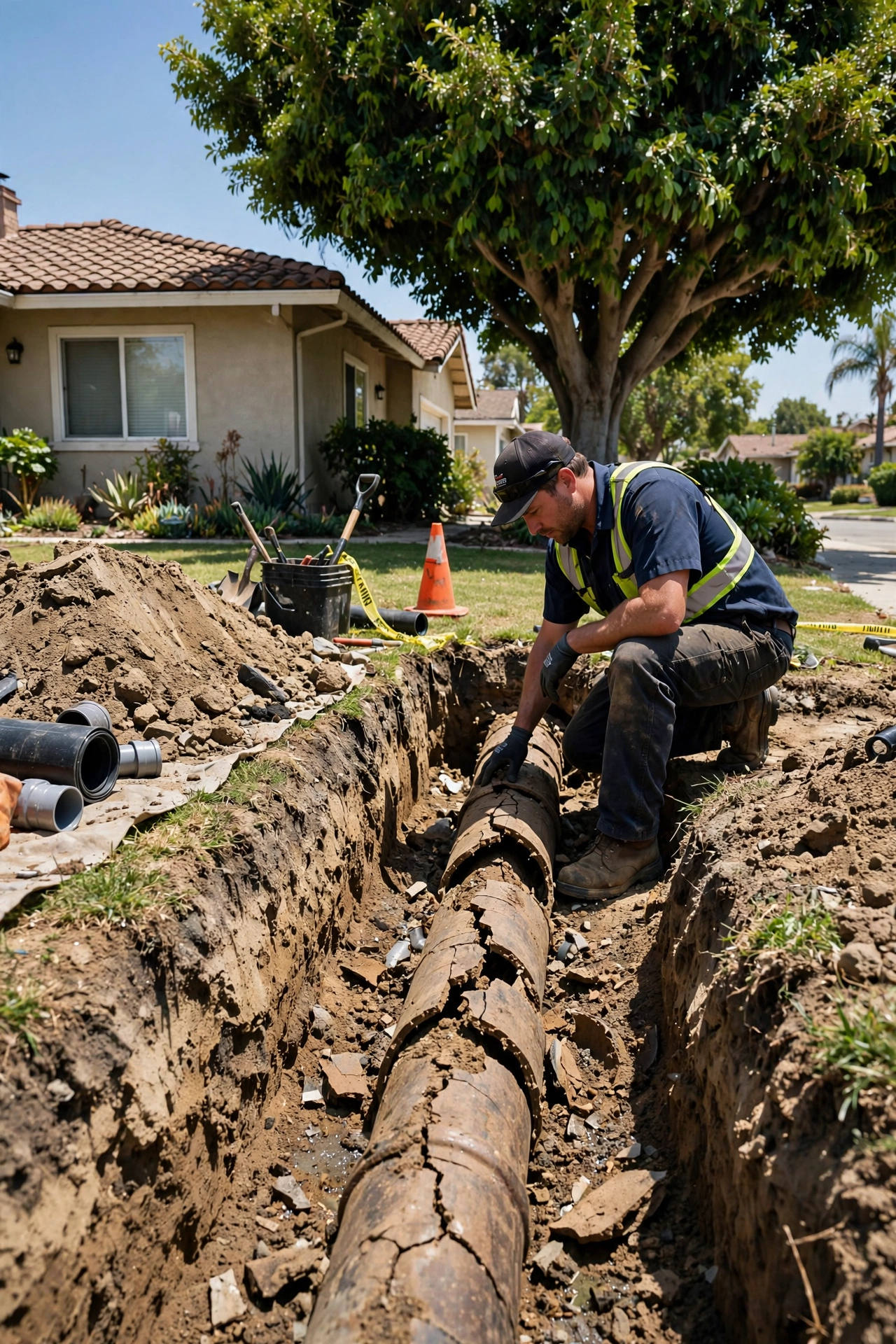
Every material has a design life. Clay tile can last generations but fails at its joints; cast iron corrodes from the inside and, at 50-70 years in this area’s soils, is often found with its bottom channel worn through; Orangeburg pipe (a wartime-era fiber pipe still found in some older homes) deforms and blisters and is essentially always a replacement candidate. Our guide to sewer pipe materials walks through each one. A 60-year-old cast-iron line with one crack is not one repair away from health — it is a material at end of life showing its first symptom.
Factor three: the failure pattern
A single mechanical event — one offset joint, one cracked section where a tree root forced in, one break under a driveway — repairs cleanly. A pattern — multiple bellies, repeated offsets, roots at every joint — describes a line failing as a system. Pattern problems get pattern solutions: lining (which renews the whole interior) or replacement. Homeowners can sanity-check this themselves by asking one question: ‘Show me the rest of the line on the footage.’ The answer is in the video.
Factor four: what the line runs under
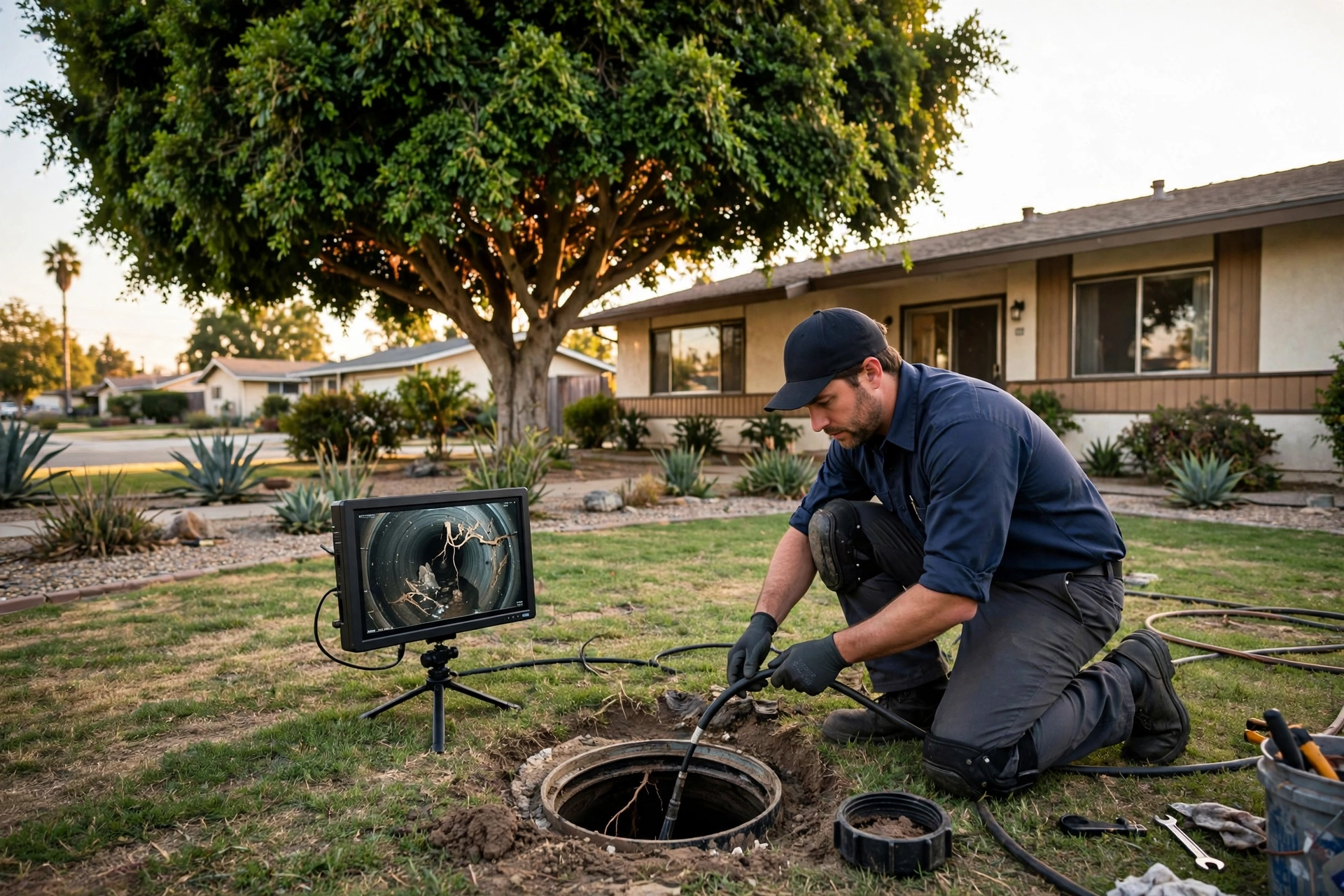
Access changes the practical math. A failing line under open lawn digs easily; the same line under a stamped patio, a pool deck or a mature ficus argues for trenchless methods — lining or bursting — which renew the full run without excavation. Where the line runs can turn a ‘replacement’ verdict into a ‘trenchless renewal’ plan, which is why our page on trenchless sewer repair belongs in this decision.
The middle option people forget: lining
Repair-versus-replacement is really a three-way decision. CIPP lining sits between them: a full-length renewal at the interior, no trench, sealed joints — appropriate when the host pipe still holds its shape and alignment. It cannot fix a collapsed pipe or a severe belly, and any professional recommending it should be able to show you, on your footage, why your line qualifies.
How to protect yourself in this decision
Three rules. First, never decide from a description — decide from footage you have watched. Second, get the scope in writing, including what was found in the sections NOT being repaired. Third, be suspicious of any recommendation — in either direction — made before a camera has been in the line. A pattern to notice: repair quotes that grow by phone and replacement quotes given from the driveway are both guesses wearing a uniform.
The short version
One bad stretch + sound remainder + repairable material = repair it. System-wide damage, end-of-life material, or repeated failures = replace or line it. And every path starts at the same place: a camera inspection that turns opinions into evidence.
On a sound line with localized damage, no — it is a permanent fix for that stretch, and the correct scale of work. It becomes a band-aid only when the rest of the line is failing too, which is exactly what the pre-repair camera survey is meant to rule out.
A new PVC or HDPE lateral is a decades-long installation — the pipe materials are rated for very long service lives and the joints are sealed. A spot repair lasts as long as the surrounding old pipe does, which is why the condition of the remainder is the whole question.
That combination usually means the conversation should include lining or replacement, not just a spot fix — a belly is a slope problem a repair of one joint will not solve. The footage will show how long the belly runs; short and shallow may be repairable, long and deep points to renewal.
Related Services & Guides
Have This Problem at Your Home?
Guides explain the problem — a camera shows whether it is yours. One call connects you with an independent local sewer professional in the Cerritos area.
Call (888) 555-0199 →Get in Touch with Us
The fastest way to reach a local sewer professional is by phone. Prefer to write it down first? Send the short form — describe what you are seeing, where, and since when.