Sewer Camera Inspection: What the Footage Tells You
A sewer camera inspection is the highest-value hour in residential plumbing: one pass that replaces guesswork with a video of your actual pipe. This guide explains what the camera sees, what the findings mean, and how to use the footage to make — or challenge — any repair decision.
What the camera actually sees
The camera head is waterproof, self-leveling (the picture stays upright as it travels), and lit. Fed through a cleanout, it records the full lateral to the city connection. A trained eye reads: pipe material and joint spacing; root intrusion from hairline to full mass; bellies, shown as stretches where the camera travels underwater; offsets, where one section has shifted against the next; cracks and fractures; corrosion and channeling in cast iron; grease and scale buildup; and full or partial collapses. A transmitter in the head lets the operator pinpoint each finding’s location and depth from the surface.
How to read the five most common findings
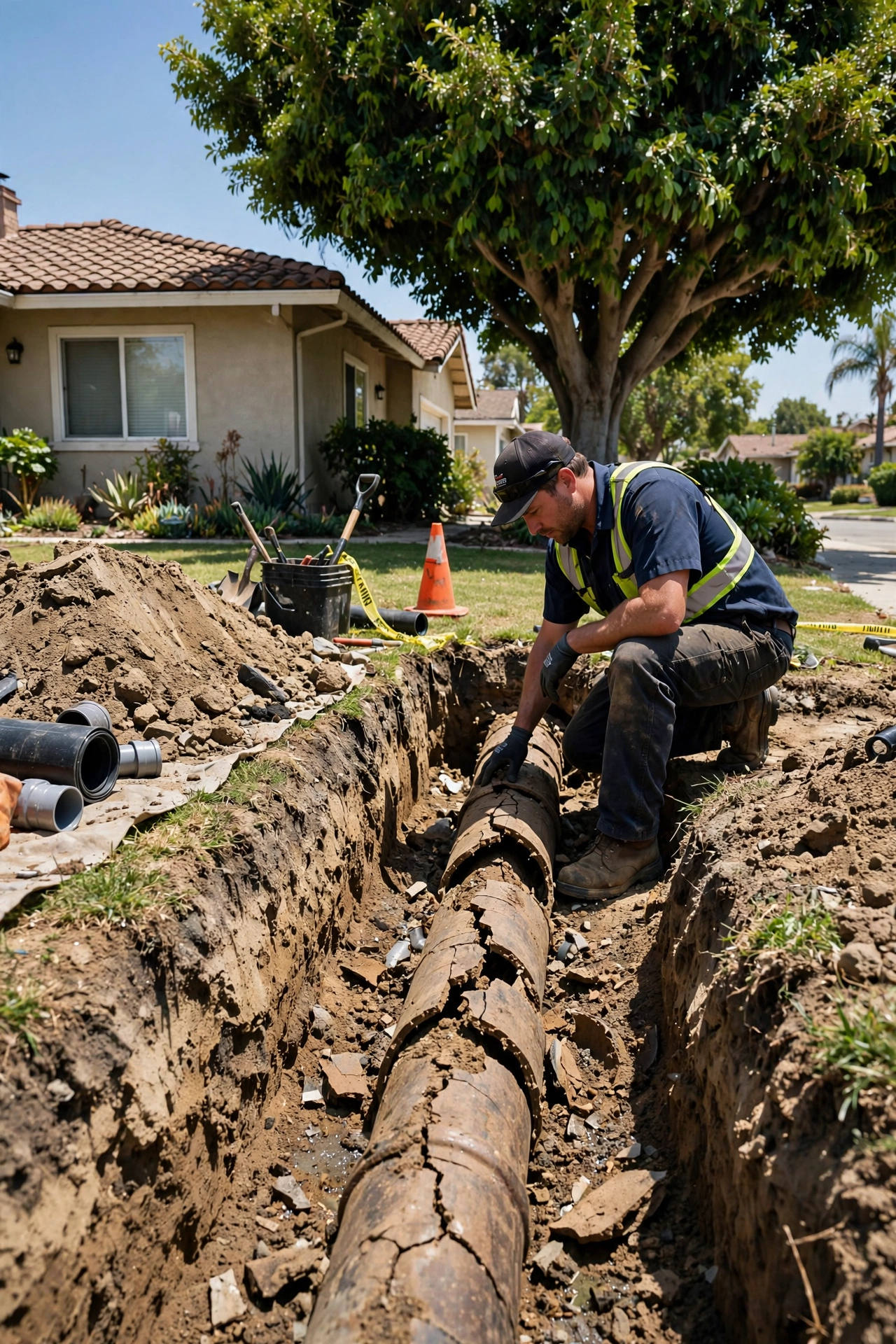
Roots at the joints: normal for old clay; the question is density and whether the joint is cracked open — cleaning, lining or a spot repair follows from that. A belly: severity is length and depth; a shallow short sag may be monitored, a deep long one is a renewal conversation. An offset: minor offsets get watched, major ones (pipe edges visibly misaligned, waste catching) get repaired. Corrosion in cast iron: surface rust is age; a worn-through bottom channel is end-of-life. A collapse: the one finding with no middle options — that section gets dug and replaced.
What a good inspection includes
The full run filmed, not a peek at the first ten feet. Findings narrated and shown to you, live or on playback. Locations and depths marked for anything significant. A recording you can keep — it is your home’s document, useful for a future sale, a second opinion, or your own records. And a summary in plain language separating what is urgent, what is watchable, and what is fine. If an inspection produces only a verbal quote for a big job, it was a sales call, not an inspection.
When to get one
The triggers: recurring clogs or slow drains; a backup; an older home whose line has never been scoped; before a major remodel or addition adds load to the line; when buying or selling (our home purchase guide covers that scenario specifically); and before approving any significant repair or replacement quote — a second-opinion scope is the cheapest insurance in this trade.
What the camera cannot do
Honesty section. The camera sees the inside of the pipe; it cannot see soil conditions outside it, measure wall thickness in plastic, or predict exact timelines (‘this will fail in two years’ is not something footage says). A line full of water or grease may need jetting before it can be filmed at all. And the camera’s verdict is about condition — the right response still depends on the factors in our repair vs. replacement framework.
After the inspection
You should leave with three things: the footage, a located map of any defects, and options scaled to the findings — clean it, monitor it, repair a stretch, line it, or replace it, each with its reasoning. The service itself is described on our sewer camera inspection page. Whatever you decide, decide from the video: it is the rare home repair where you can literally watch the problem yourself.
Yes — you should expect to watch live or review the recording with the operator, with findings pointed out and explained. It is your pipe and your decision the footage informs; an inspection you are not shown is a red flag.
About an hour for a typical home, including setup, the camera run, and reviewing findings. Lines that need jetting first, or very long runs, take longer.
It can miss what is not visible: a line too full to film (jetting fixes that), and conditions outside the pipe wall. Within the pipe, a full-length HD run is the most complete diagnostic that exists for a lateral — far beyond symptom-based guessing.
Related Services & Guides
Have This Problem at Your Home?
Guides explain the problem — a camera shows whether it is yours. One call connects you with an independent local sewer professional in the Cerritos area.
Call (888) 555-0199 →Get in Touch with Us
The fastest way to reach a local sewer professional is by phone. Prefer to write it down first? Send the short form — describe what you are seeing, where, and since when.