Buying or Selling a Home in Cerritos? Get the Sewer Line Checked
The most expensive pipe in the house is the one nobody inspects. Roofs get inspected, HVAC gets inspected — and the 55-year-old clay lateral, whose replacement dwarfs both, gets a shrug. Here is why a sewer scope belongs in every Cerritos-area transaction, for buyers and sellers alike.
Why transactions miss the sewer line
A standard home inspection covers what is visible inside the house; the buried lateral is outside its scope — at most, the inspector runs water and notes that drains flow. But ‘drains flow on inspection day’ says nothing about roots at 40 feet, a belly at 60, or cast iron with a year of bottom left. In this cluster, where most homes date to the 1960s-70s and their laterals with them, an unscoped line is the largest unknown in the deal — and unknowns discovered after closing belong entirely to the buyer.
What a sewer scope adds to a purchase
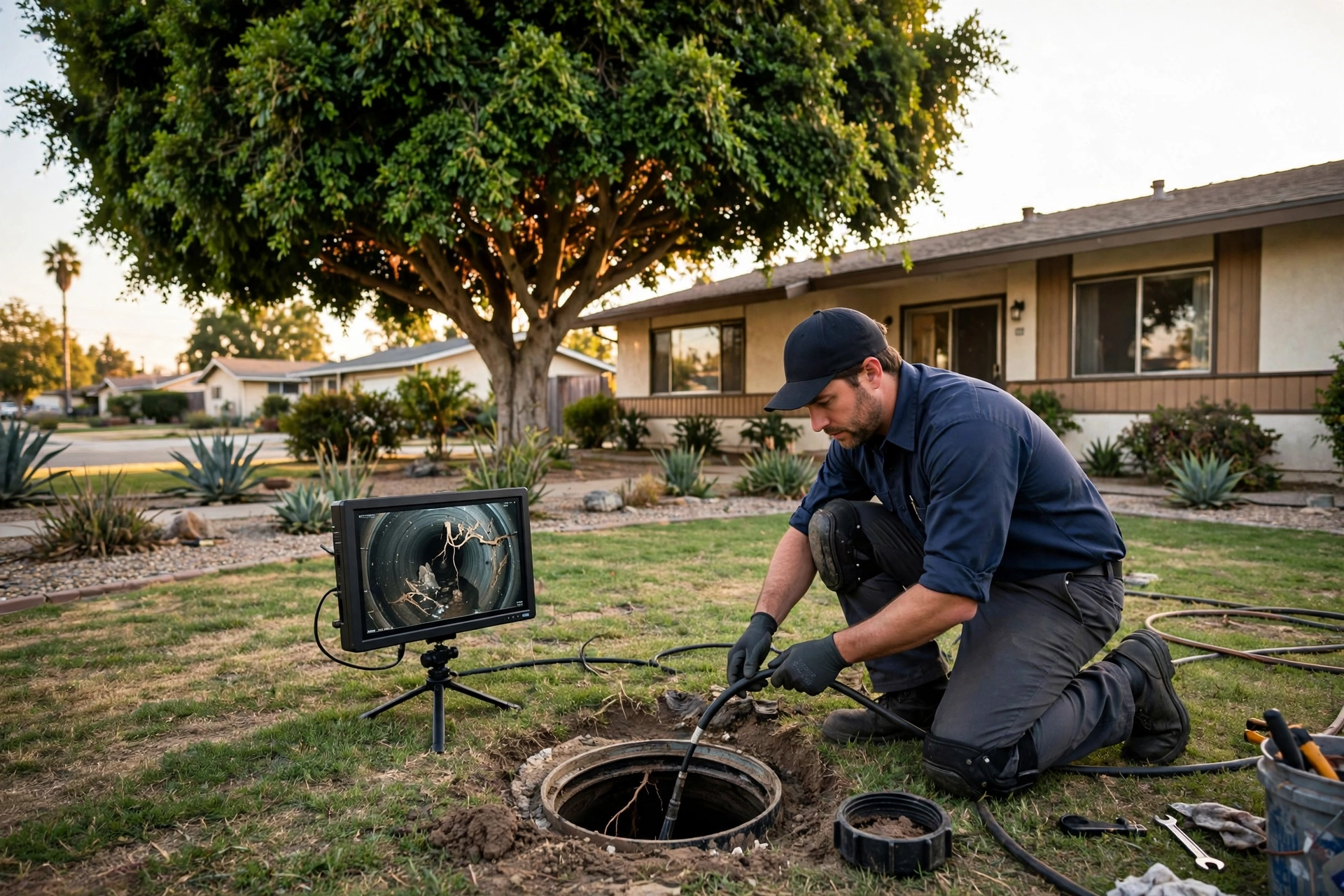
A camera inspection during the inspection period converts the unknown into a document: the line’s material, condition, and any defects, located and filmed. Outcomes sort into three buckets. Clean bill: the line is sound — buy with confidence. Maintenance findings: roots or buildup needing cleaning — a small, plannable item. Structural findings: damage needing repair, lining or replacement — a material fact that belongs in negotiation, whether as a credit, a pre-close repair, or a price conversation. All three outcomes are better than discovering bucket three in your first month, mid-backup.
For sellers: the pre-listing scope
Sellers increasingly scope before listing, and the logic is sound. A documented healthy line is a selling point in a market of aging housing stock — the footage goes in the disclosure packet like a badge. A known problem, disclosed with a professional’s written scope, is a negotiation you control on your timeline — rather than a buyer’s discovery during escrow, where it arrives with deadline pressure and worst-case assumptions attached. Either way, the camera replaces suspicion with paper.
What to ask for (and what to watch out for)
Ask for the full-length footage, the located findings, and the written summary — the deliverables described in our camera inspection guide. Watch out for a ‘scope’ that is really a sales visit: a five-minute peek followed by a replacement quote is not an inspection. And both sides should remember responsibility: in most cities here the lateral is the homeowner’s — see who pays for the lateral — so its condition is squarely a transaction item.

Timing and logistics
Scopes are scheduled like other inspections and take about an hour, ideally in the inspection contingency window. Access is usually through an existing cleanout; in homes without one, the inspector will explain options. Sellers can simplify everything by scoping pre-listing and making the recording available to buyers’ agents — it shortens escrow arguments to a video everyone can watch.
The bottom line
A sewer line is a five-figure asset or liability hiding under the lawn of a six- or seven-figure transaction. For the price of an hour and a camera, both sides can know which it is. In a cluster built in one era, with pipes aging in lockstep, that knowledge is not optional diligence — it is the diligence.
Not generally by law for a standard sale — some cities have point-of-sale requirements for specific situations, and lenders or insurers occasionally ask. Required or not, it is widely recommended for homes of this area’s age, and buyers can simply request it during their inspection period.
Typically the buyer orders and pays for inspections during their contingency period; sellers who scope pre-listing pay for their own. Either way it is a modest, fixed item compared to the numbers it informs.
Almost never on roots alone — roots are the most common finding in this area and range from ‘clean it and monitor’ to ‘line it.’ What matters is the full picture: density, joint condition, and the rest of the line. Get the footage reviewed and the options scoped before making it a deal decision.
Related Services & Guides
Have This Problem at Your Home?
Guides explain the problem — a camera shows whether it is yours. One call connects you with an independent local sewer professional in the Cerritos area.
Call (888) 555-0199 →Get in Touch with Us
The fastest way to reach a local sewer professional is by phone. Prefer to write it down first? Send the short form — describe what you are seeing, where, and since when.