What Is Trenchless Sewer Repair? CIPP Lining and Pipe Bursting Explained
‘Trenchless’ promises a new sewer line without tearing up your yard — and for the right pipe, it delivers exactly that. Here is how the two methods actually work, what each is good at, and the honest limits nobody should skip.
Method one: CIPP lining (a new pipe inside the old)
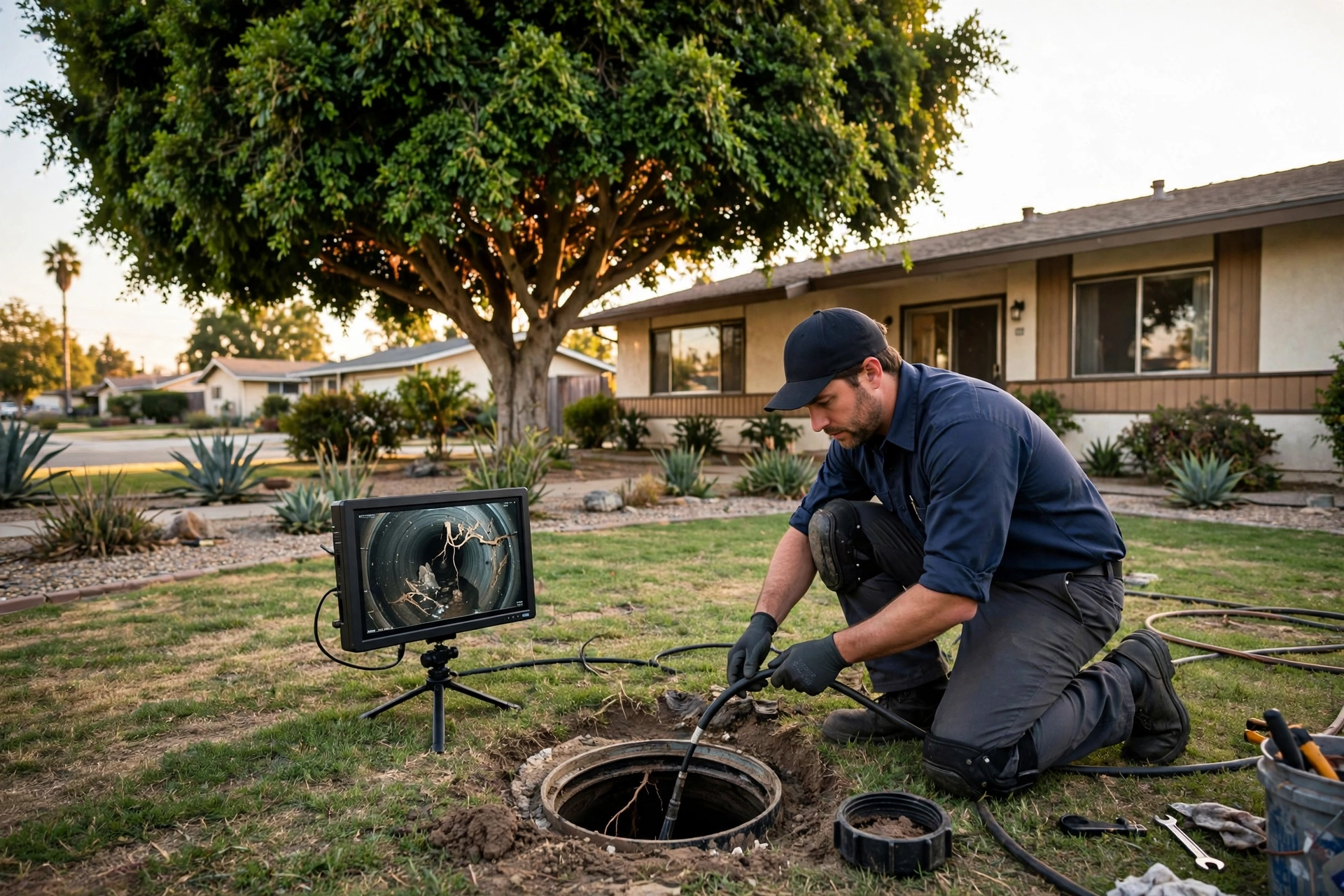
CIPP — cured-in-place pipe — starts with a thorough cleaning and a camera survey of the old line. A flexible liner saturated with resin is then inverted or pulled into the pipe and pressed against its walls. The resin cures — with hot water, steam or UV light depending on the system — and hardens into a smooth, jointless pipe that lives inside the old one. Branch connections from the house are reopened from inside with a robotic cutter, and a final camera pass verifies the result. The finished liner is a structural pipe in its own right, not a coating.
Method two: pipe bursting (replace in place)
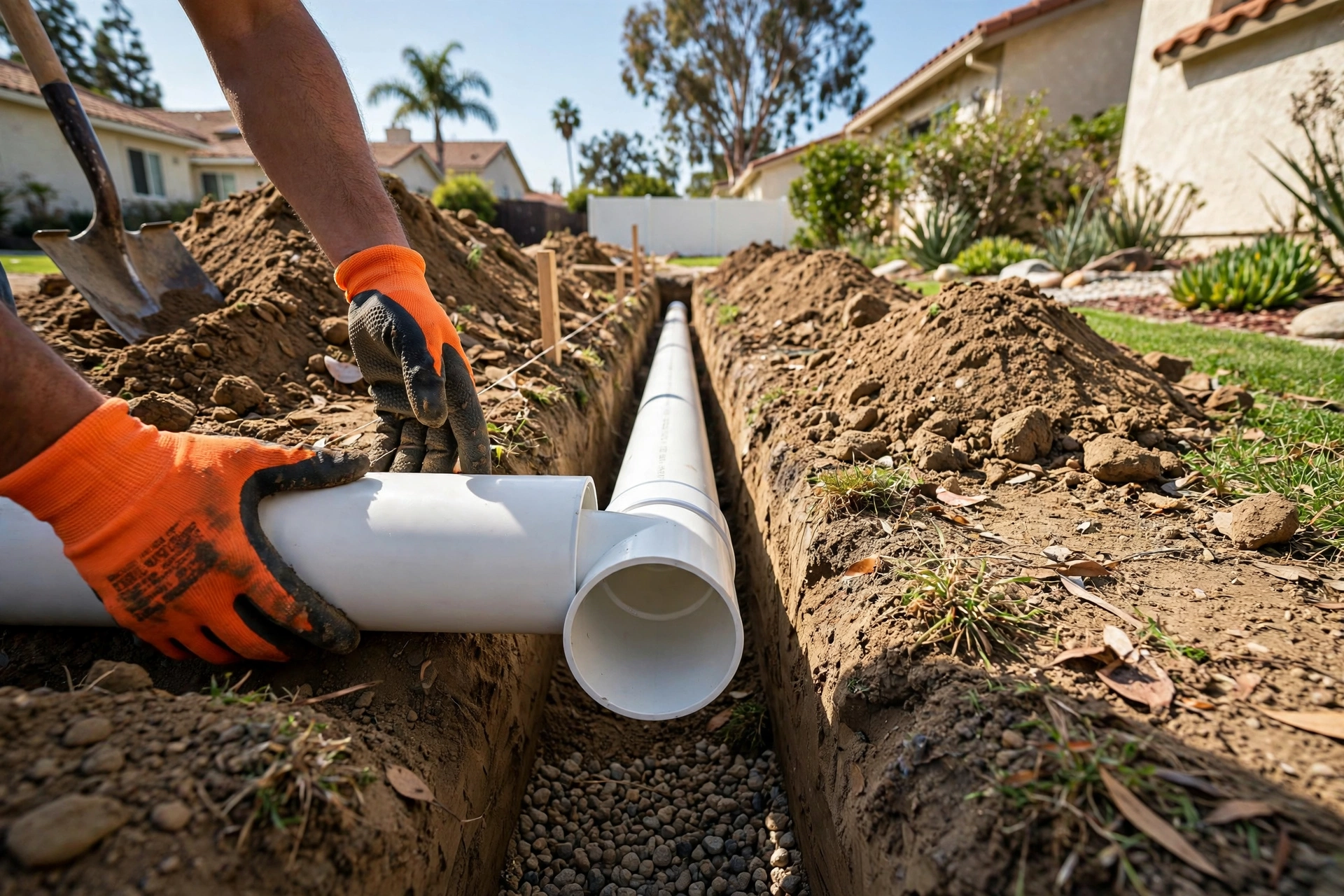
Pipe bursting pulls a cone-shaped bursting head through the old pipe with a powerful winch or rod machine. The head fractures the old pipe outward into the surrounding soil while towing a new seamless HDPE pipe in directly behind it. The new pipe follows the old path — and can even be upsized. Bursting fully replaces the pipe (unlike lining, which rehabilitates it) and needs an access pit at each end rather than a full trench.
What trenchless is good at
Roots at the joints — lining deletes every joint along the run, ending root entry permanently. Long runs under driveways, patios, pools and landscaping you intend to keep. Aging clay or cast iron that still holds its shape but leaks at joints and seams. In the Cerritos cluster, where laterals run under 50-year-old finished yards and mature ficus trees, these situations are the norm rather than the exception.
The honest limits
Trenchless is not magic, and three conditions rule it out. A pipe that has collapsed completely cannot be lined (there is no passage to line) and may not burst cleanly. A pipe with severe bellies — long sags holding water — will pass its bad slope to a liner, which follows the host pipe’s shape; bursting follows the old path too. And a line that has shifted far out of alignment needs excavation to correct. This is why every trenchless recommendation must start with a camera inspection: the footage is what qualifies your line — see our camera inspection guide for what that survey shows.
How long it takes, and how long it lasts
Most residential lining jobs complete in a day once access and cleaning are done: line in the morning, cured by afternoon, verified on camera before sign-off. Bursting runs on a similar schedule for typical home laterals. As for lifespan, CIPP liners are manufactured and rated for service lives measured in decades — a 50-year design life is the industry standard figure — and HDPE pipe carries similar ratings. Both outlast the patch-and-clear cycle by a wide margin.
Trenchless vs. open digging: how the choice is really made
It is not trenchless good, digging bad. A short, shallow line in open lawn may dig faster and simpler than it lines. A collapsed or badly bellied line must be dug regardless. The decision comes from the survey footage plus what sits above the pipe. Our page on trenchless sewer repair lays out the service itself, and the repair vs. replacement framework shows where trenchless sits in the bigger decision.
Slightly — the liner sits inside the old pipe, reducing the internal diameter by a few millimeters. In practice the effect on flow is offset by the new surface being far smoother than aged clay or corroded iron, and residential lines have generous capacity. It is a non-issue for normal homes.
Yes. A lined line can be jetted and camera-inspected like any other, and if a section ever needs work, standard methods apply. Future plumbers will appreciate the footage record from the lining job — keep it with your home documents.
Not always, and any honest answer is property-specific: length, depth, access, and what the surface restoration would cost all factor in. What trenchless reliably saves is the destruction — driveway, patio, landscaping and tree roots stay intact. Get both options scoped in writing when your line qualifies for both.
Related Services & Guides
Have This Problem at Your Home?
Guides explain the problem — a camera shows whether it is yours. One call connects you with an independent local sewer professional in the Cerritos area.
Call (888) 555-0199 →Get in Touch with Us
The fastest way to reach a local sewer professional is by phone. Prefer to write it down first? Send the short form — describe what you are seeing, where, and since when.