Sewer Backup in Your Home: First 24 Hours
Sewage coming up through your drains is the worst day in homeownership — and the day when the order of your actions matters most. Here is the first-24-hours playbook: what to do in the first ten minutes, the first hour, and the first day.
Minutes 0-10: stop the flow
Stop all water use in the house — no flushing, no laundry, no dishwasher, no showers. Every gallon that goes down a drain upstairs comes out of the lowest drain downstairs. If you know where your home’s water shutoff is, close it. Keep people and pets away from any area with standing sewage, and turn off power to affected outlets or appliances only if you can do so without standing in water — otherwise leave it to the professionals.
Minutes 10-30: make the call
Call for emergency help — this is what our emergency sewer backup service exists for — and describe the situation plainly: which drains are affected, whether sewage is present, and whether it is still rising. While you wait, take photos and a short video of the affected areas for your records, move dry belongings out of the water’s path, and place towels at doorways to limit spread. Do not pour chemical drain cleaner into a backed-up line; it will not clear a main-line blockage and it adds poison to the mess.
Hour 1-4: the clearing
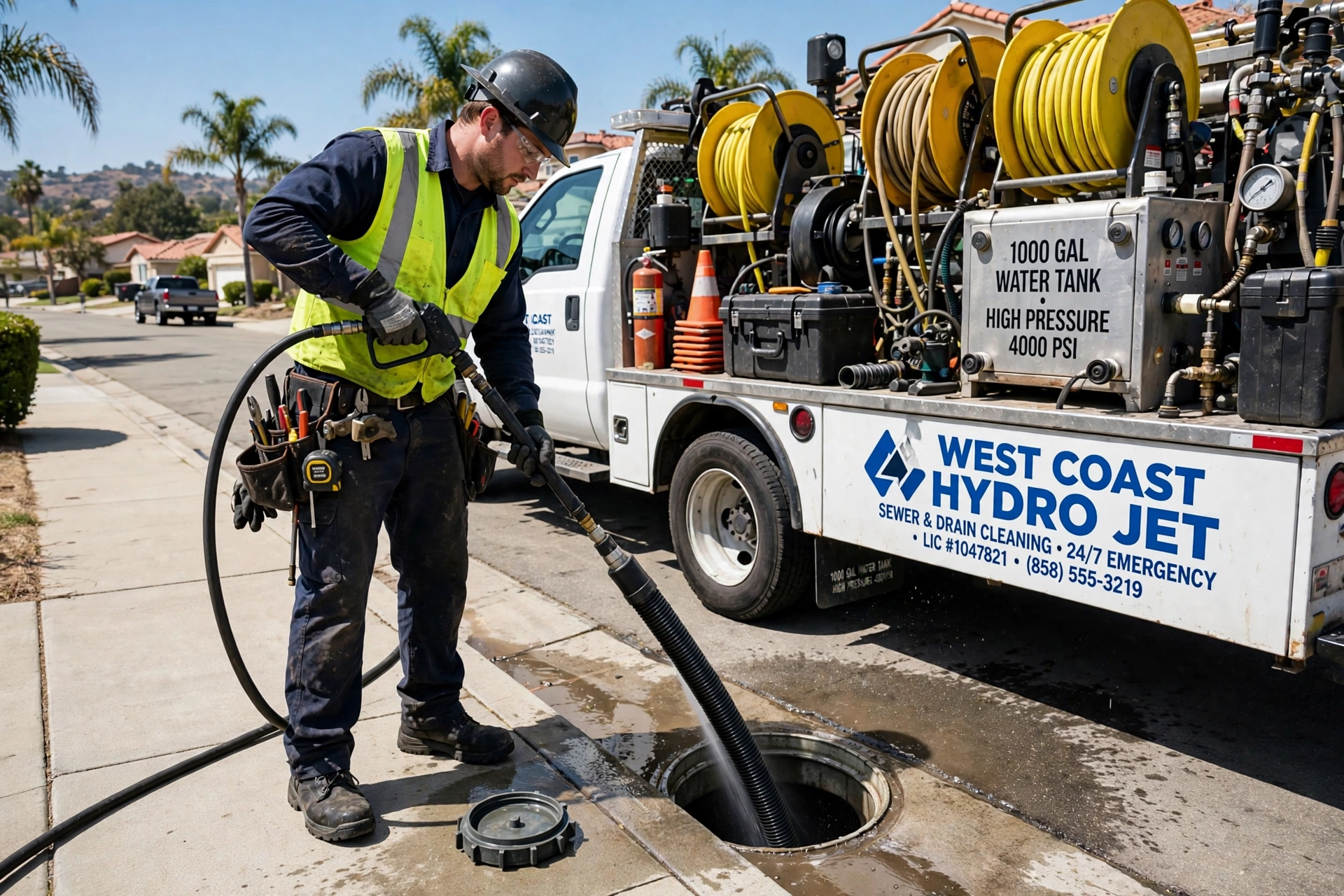
The professional’s first job is restoring flow, usually working from an exterior cleanout so equipment and mess stay outside your living space. Root masses get cut, packed bellies get jetted, blockages get removed and the line gets flow-tested until the house drains normally again. Expect honest triage here: if the line cannot be reopened because it has collapsed, you will hear that plainly, along with what happens next.
Hour 4-24: find the cause
A cleared backup without a diagnosis is a backup scheduled to repeat. Once flow is restored, the line should be filmed. The camera will find the usual suspects — roots that finally closed the line, a belly that filled with solids, a grease dam, or a structural failure — and that footage drives the permanent plan. Our guide to the signs of a failing line explains what each finding means.

Cleanup: what is safe, what is not
Sewage contains bacteria and viruses; treat it seriously but methodically. Small, contained spills on hard surfaces can be cleaned with protective gloves, removal of contaminated soft materials (rugs, cardboard, anything porous that soaked through), detergent washing, and disinfection. Porous materials that have absorbed sewage — carpet padding, drywall that wicked it up, upholstered furniture — generally need to be discarded rather than cleaned. For extensive spread, standing sewage in multiple rooms, or any contamination near electrical systems, bring in a professional remediation company; this is also the moment to call your homeowner’s insurance, as sewer backup coverage is a specific (and often optional) part of many policies — check yours before you need it.
The decision that follows
With flow restored and footage in hand, the permanent fix is chosen calmly: cleaning on a schedule for a sound line, a spot repair for localized damage, lining for joint problems, replacement for structural failure. The framework in repair vs. replacement walks through how that decision is made. The crisis buys urgency for step one — it should never be used to rush step two.
On a single clogged fixture, yes. On a main-line backup — multiple fixtures affected, sewage at floor drains — plunging just moves sewage between fixtures and a small home snake cannot cut roots or clear a packed main line. You risk making the mess bigger; this is equipment work.
Once the line is cleared and flow-tested, fixtures can be used again. The affected areas should be cleaned and disinfected before normal use — hard surfaces quickly, porous materials by removal. Your professional can tell you what your specific situation needs.
If the cause was a one-time event (something flushed that should not have been), maybe not. If the camera shows roots, a belly or damage — the common causes — then yes, it will recur on a shortening schedule until the underlying problem is fixed.
Related Services & Guides
Have This Problem at Your Home?
Guides explain the problem — a camera shows whether it is yours. One call connects you with an independent local sewer professional in the Cerritos area.
Call (888) 555-0199 →Get in Touch with Us
The fastest way to reach a local sewer professional is by phone — describe what you are seeing, where, and since when.